
Mockup by 1760 Strategic AI.Back to proposal
ARNH Testing & DiagnosticsphoneRequest a Survey

Electronic Leak Detection and Membrane Integrity Testing

Electronic leak detection (ELD) finds breaches in a waterproofing membrane, from pinholes to poorly sealed laps, without cutting into the roof. We use it on existing roofs to trace leaks, and on new membranes before they are covered or handed over.

Finds
Breaches in the waterproofing membrane
Methods
High-voltage (dry) and low-voltage (wet)
Best for
Exposed membranes, including new roofs before finishes go on
You receive
A test report with breach locations on a roof plan
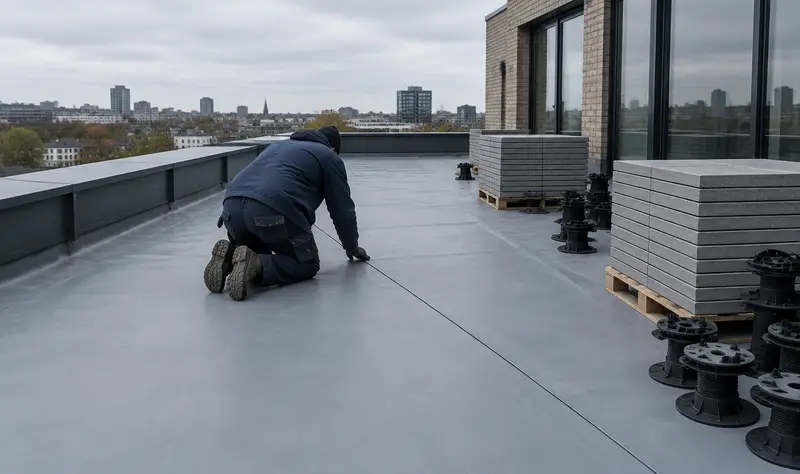
A newly laid single-ply membrane on a roof terrace, before the paving goes down

Flat roof leak detection: when ELD is the right test

  • Handover and warranty. Many specifications and warranty providers require integrity testing before green roofs and paving go on, and the GRO Green Roof Code calls for it before a green roof is installed. For liquid-applied membranes, the LRWA publishes guidance on electronic testing. Send us the requirement and we will confirm whether we can meet it.
  • A new or refurbished roof, before finishes go on. Testing the exposed membrane before ballast, paving, decking, a green or blue roof or inverted insulation covers it.
  • A leak on an exposed membrane. Water is getting in and the membrane is exposed, so we can trace it directly.
  • After repairs. Retesting repaired areas to check whether any breaches are still detected.
  • Send us the specification
MembraneConcrete deck

What you receive

  • A written test report naming the method and equipment, with the calibration certificate
  • The test conditions on the day
  • A roof plan showing the tested areas and their boundaries, with photographs of the marked boundaries
  • Each breach found, marked on the plan with close-up and wider photographs
  • Retest results, where breaches are repaired while we are on site
  • A clear statement of what was tested and what was not
  • Recommended next steps
Illustrative report page with sample figures. Your anonymised sample report replaces it.

On the day, we need

  • Safe roof access
  • Any roof plans or membrane details you have
  • A water supply, for low-voltage testing

Where the roofing contractor repairs breaches while we are on site, we can retest the same day when conditions allow.

How it works

A waterproofing membrane resists electrical current. With a conductive path to earth directly beneath it, a charge applied to the surface escapes through any breach. The equipment picks up that signal and pinpoints the breach. It is marked, the roofing contractor repairs it, and we retest.

Insulation, metal details and the test set-up all affect the result, so we check the construction before we quote.

Cross-section: a charge applied to the membrane surface escapes through a breach to the conductive deck below and returns to the detector through the earth lead.MembraneConductive deckTest brushDetectorCharge escapes throughthe breach to the deckEarth return
Simplified, high-voltage method.

High-voltage and low-voltage testing

MembraneConcrete deck

High-voltage (dry) testing

A brush is swept across the dry, exposed membrane, with the voltage set to suit the membrane and its thickness. Where a breach gives the charge a path to earth, the equipment alarms. The current is very small. It suits most single-ply, reinforced bitumen and liquid-applied membranes, and is often preferred on liquid systems where pinholes are a risk.
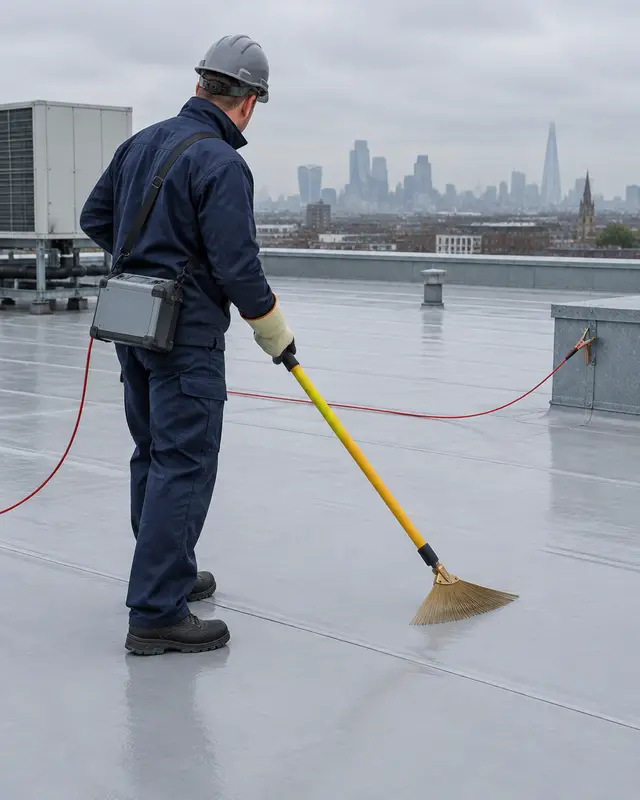
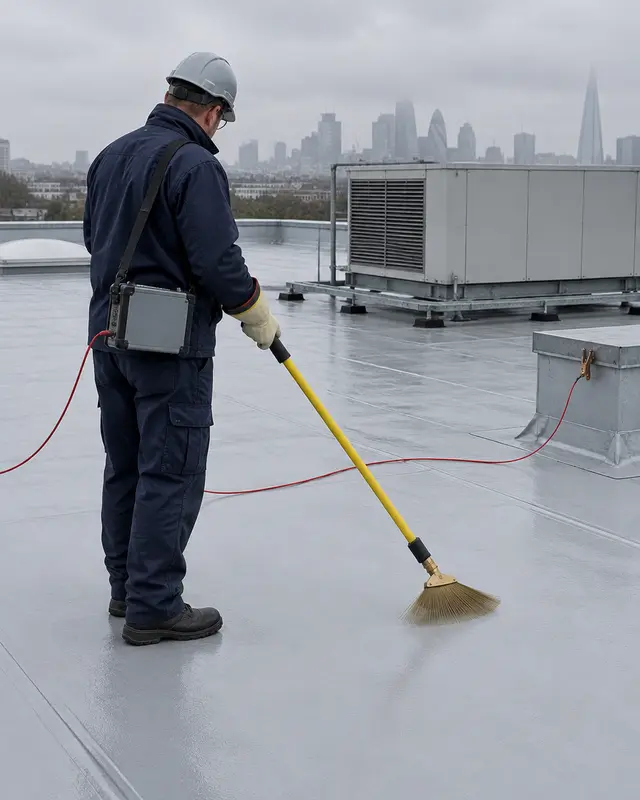
High-voltage testing with a brass brush electrode on a dry membrane
MembraneConcrete deck

Low-voltage (wet) testing

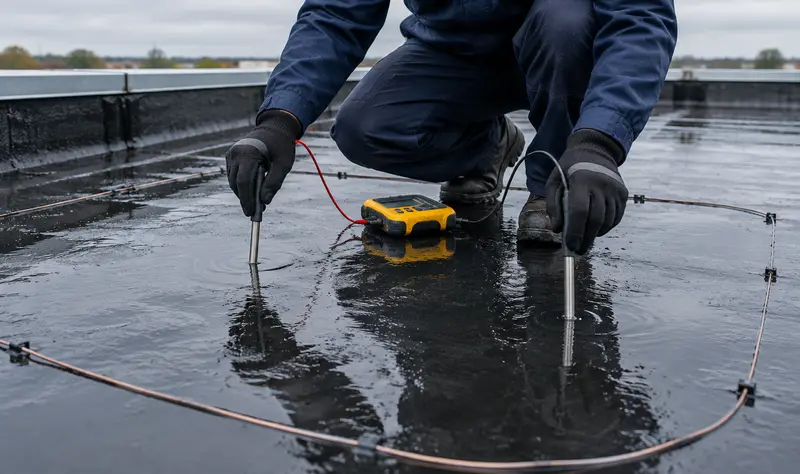
The membrane is wetted so the surface carries a current. In one common method, we lay a wire loop around the test area and pulse about 40 volts through it. The operator then follows the electric field with probes to the point where it passes through the membrane. Other low-voltage systems scan the wet membrane directly.

Low-voltage testing: probes on a wetted membrane inside a perimeter wire

Which one we use

A dry, exposed membrane suits high-voltage testing. A wet surface, or weather that rules out high-voltage work, points to low-voltage. The membrane and the build-up beneath it have the final say: we follow the manufacturer's guidance, and on some roofs we use both.

Where ELD falls short

Better to know this before you book.

  • It needs a conductive path under the membrane.A concrete or metal deck gives one only if nothing insulating sits in between. Warm roofs and timber decks need a conductive layer installed beneath the membrane. We check the construction before we quote.
  • It does not suit conductive membranes.EPDM and carbon-loaded liquid membranes generally cannot be tested this way.
  • It works best on an exposed membrane.Some low-voltage methods still work once a green roof, paving or ballast is on, but finding breaches through the build-up is far less reliable.
  • It will not show wet insulation.ELD shows where water can get through the membrane, not how much of the build-up is already wet. Moisture mapping finds the suspect areas and cores confirm them.
  • It sits alongside a visual inspection.Flashings, outlets and upstands still need a close look, and sometimes a different test.

If ELD is not the right test for your roof, we will say so and recommend what is.

Roof systems ELD can test

Roof systems ELD can test

Suitability depends on the specific product and construction, which we confirm before testing.

Questions

How quickly can you attend?

typical lead time and report turnaround

Is electronic leak detection safe?

High-voltage testing uses a very small current, and low-voltage testing runs at around 40 volts. We mark off the test area while we work and agree roof access with your site team beforehand.

Will testing damage the roof?

The test itself does not cut or open the membrane. Core sampling is a separate step, used only when needed and agreed with you first.

What does a clear result mean?

That no breaches were detected in the area tested, under the conditions on the day. The report records both, so everyone knows what the result applies to. It says nothing about areas that were not tested, and it is not a guarantee of future performance.

Can a new roof be electronically integrity tested?

Yes, where the construction allows, and the best time is after installation and before anything covers the membrane. We check the build-up in advance, because the test needs a conductive path directly beneath the membrane.

Inspection drone above a commercial flat roof
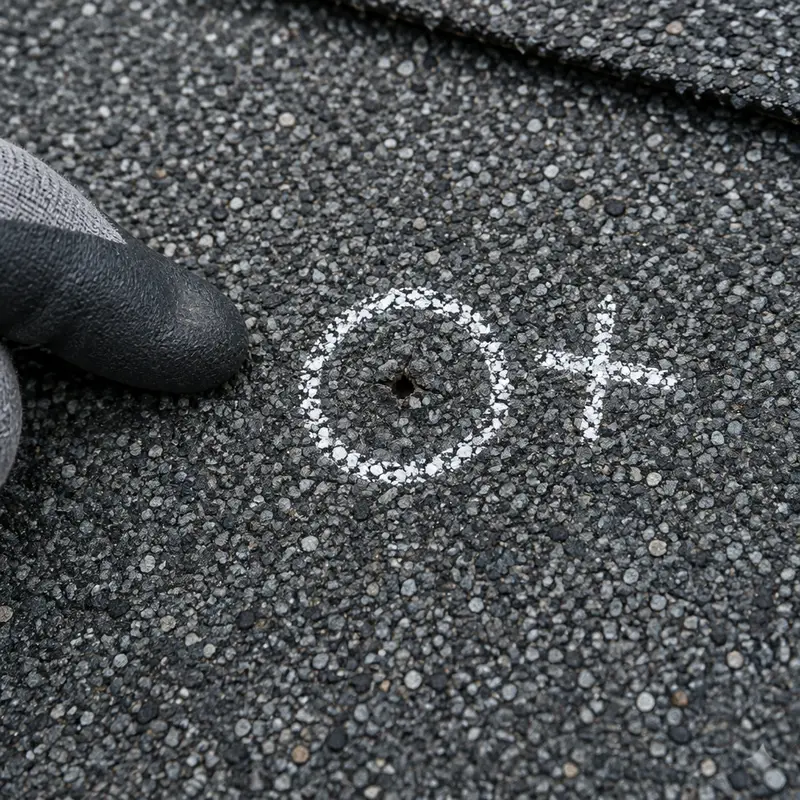
A breach marked in chalk on a membrane
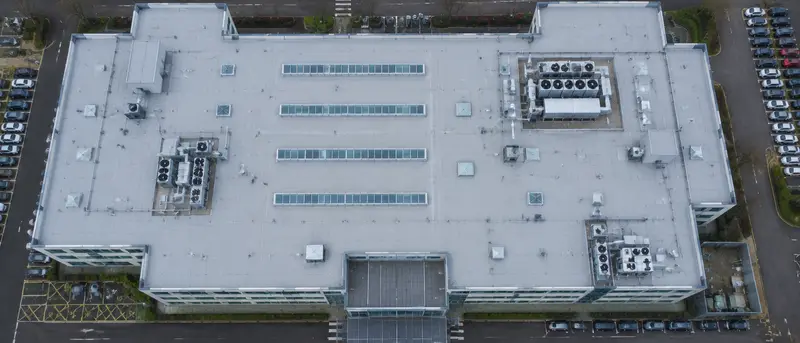
Aerial view of a commercial flat roof
High-voltage leak detection in progress
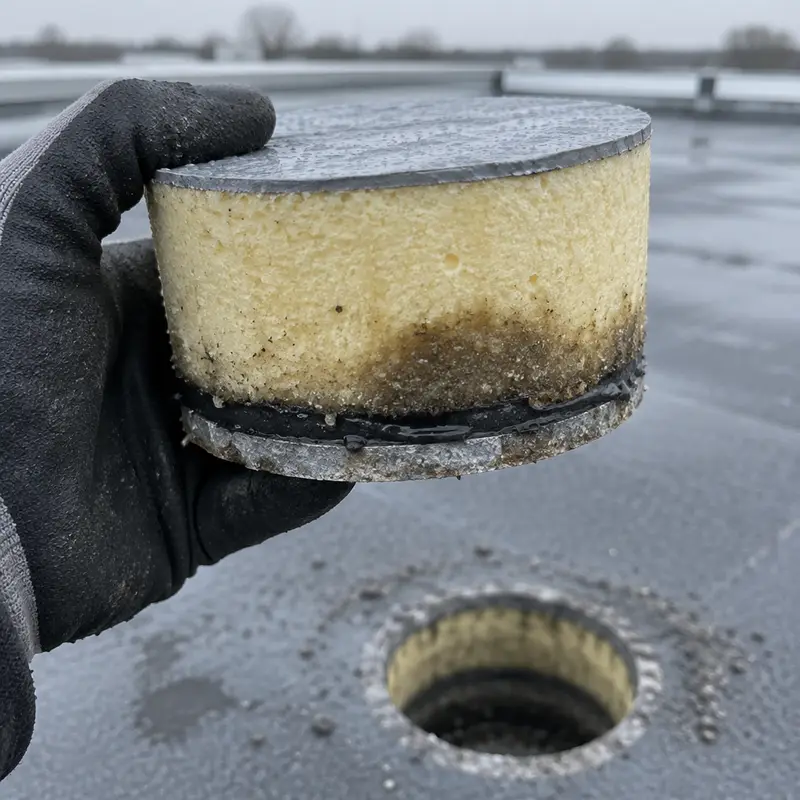
A roof core sample

Send us the roof details

The site address, the roof type if you know it and why you need it tested. We will confirm whether ELD suits the roof and what it involves.

Request a SurveyCall